
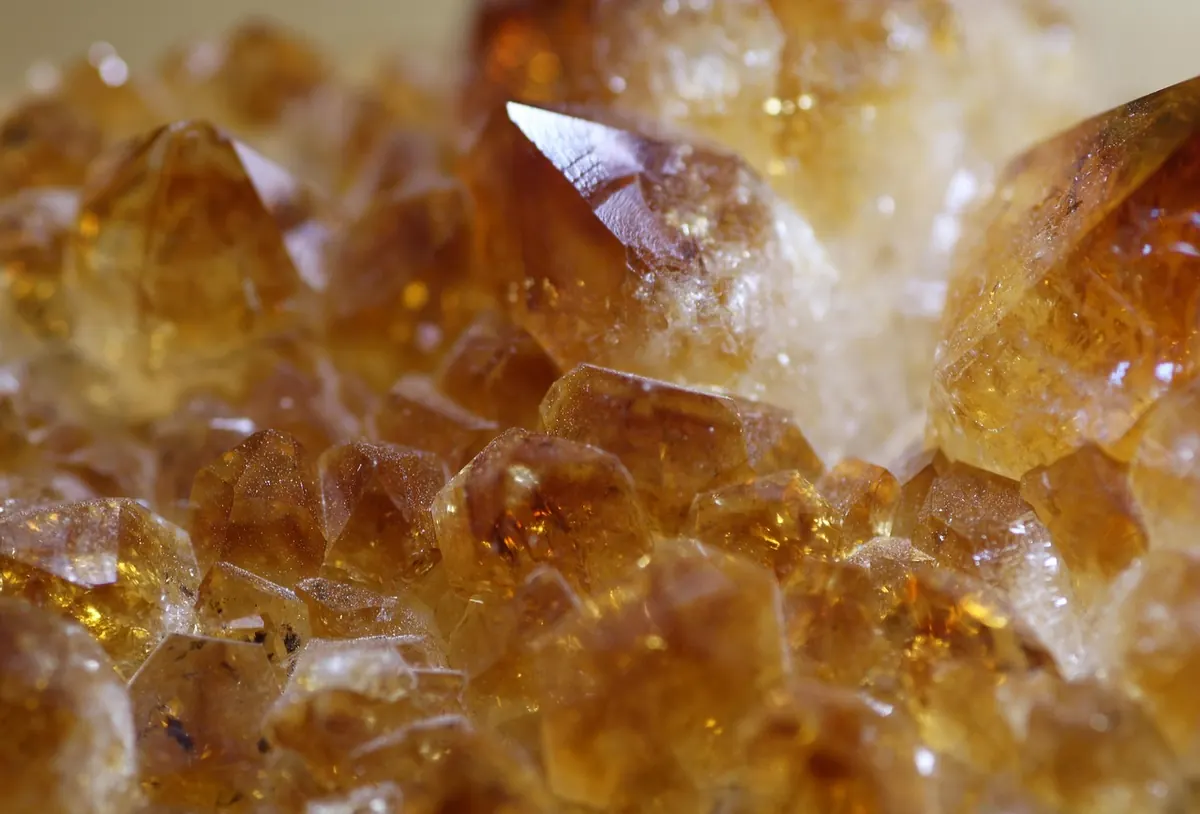
Raw quartz is one of the few jewelry materials that shows you almost everything at once. There is no pavilion to hide behind, no crown of facets to disguise a fracture, no foil backing inventing a color. What you see on the surface is more or less the whole story — which is a gift, provided you know what to look at.
Most disappointing purchases come down to a detail the buyer didn't know to check. A hairline crack running straight into the drill hole. A point that has been ground flat and sold as natural. A setting gripping the stone by its most fragile tip. None of these are disasters on their own; they only become problems when you discover them three months later.
The ten points below are the ones worth working through before you commit, whether you are buying a small pendant or a piece you have saved for.
Shape and Structure
1. Judge the silhouette before anything else. A good piece of raw quartz looks deliberate. Turn it in your hand — or study the photographs — and ask whether the shape reads as a form or as a fragment. Natural points with an intact termination, the pyramid-like tip where the crystal grew, carry a presence that broken shards never quite manage. That doesn't mean every stone needs a perfect point; chunks, clusters and split crystals all have their place. But the shape should look chosen rather than leftover.
2. Check for structural cracks, not just surface marks. Scratches are cosmetic. Fractures that reach the surface are a different matter, particularly on a ring or bracelet where the stone takes knocks. Run a fingernail across any visible line: if it catches, the flaw is open. Then tilt the stone in the light and watch for white or rainbow flashes along an internal plane — that usually means an air gap, and air gaps near a drill hole or a prong are where a stone eventually gives way.
Clarity, Color and Inclusions
3. Judge clarity in daylight, not under a shop lamp. Spotlights are designed to flatter. Take the piece to a window, or ask for a photo taken outdoors in indirect light — most sellers will oblige without hesitation. Clear quartz should look clear; milky quartz should look evenly milky rather than patchy. If a stone is described as water clear and the only photograph is on black velvet under a beam, ask for one more.
4. Learn to recognize what is inside. Inclusions are not automatically flaws. Rutilated quartz threaded with golden needles, tourmalated quartz, chlorite phantoms, soft smoky veils — these are the reason many people buy raw quartz in the first place. What you want to rule out is instability: a dense web of fractures that makes the stone feel brittle, or a cavity sitting exactly where the drill hole will pass. Clusters of perfectly round bubbles are more typical of glass than of quartz, so they are worth a question.
5. Be realistic about color and how it got there. Vivid pink, electric blue and deep green are not colors quartz produces by itself. Dyed material usually shows color pooling in fractures, and a close look at the drill hole often reveals a darker ring where the dye settled. Heat-treated amethyst becomes the yellow-orange material sold as citrine, and irradiated quartz is common too. Treatments are not automatically a problem, but they should be disclosed, and dyed or heat-treated pieces generally deserve to be kept away from long exposure to sun and heat.
Size, Weight and Wearability
6. Buy numbers, not impressions. Photographs are scaled to fill the frame, so a 15 mm point and a 40 mm point can look nearly identical on screen. Check the stated measurements in millimeters and the weight in grams, then hold a ruler against something you already own. Think about how the piece will be worn, too: a long thin point on a ring will catch on sleeves and doorframes, while a heavy cluster needs a chain or band that can actually carry it. Finally, look at the thickness of quartz around the drill hole — a bead or pendant with barely a millimeter of material on either side will chip sooner or later. A set of digital calipers costs very little and settles these questions quickly.
Surface, Finish and Honesty of Form
7. Look at the finish, and at what has been done to the stone. Raw does not mean untouched. Most wearable raw quartz has been cleaned, and many pieces are partly polished: one bright face on a point, a smoothed base, drill holes with softened edges. That is normal and often improves the piece. What matters is that the work is even and the description is honest. Look for:
- Chipped or crushed tips, especially on long points.
- Flat, ground areas presented as natural crystal faces.
- Scratches running in one consistent direction — a sign of careless handling.
- Residue around the base or setting: dried polish, wax, oil or glue.
- An uneven, waxy sheen that suggests a coating rather than a polish.
Ask directly whether the stone has been coated, oiled or stabilized. A clear answer is worth more than a perfect surface.
Setting Quality
8. Check how the stone is actually held. This is where raw quartz jewelry succeeds or fails. Prongs and wire should make contact with solid, gently curved areas of the stone — not with a point, and not directly over a fracture line. A bezel should sit snug without gaps. If the stone rocks, rattles or spins in its mount, walk away, however good the price looks. A few details worth checking:
- Contact points: metal resting on flat surfaces, never on a crystal tip.
- Wire ends: tucked in and filed smooth, not left sharp against skin.
- Coverage: wire wrapped across a vulnerable tip can hide a chip underneath.
- Balance: the stone should sit centered, without pulling the piece sideways.
9. Read the metalwork as a whole. Solder joints should be smooth and continuous rather than lumpy or grainy. A bail should sit straight and be wide enough for the chain you plan to use. Clasps should open and close with a positive click. On wire-wrapped pieces, tug gently at the frame to confirm nothing shifts — a mount that flexes will loosen with wear and put pressure on the stone.
What to Ask the Seller
10. Ask three questions and read the answers carefully. Has the stone been treated, dyed, coated or repaired? Is the photograph of the exact piece I will receive, or a representative example? What is the returns policy if the stone looks different in daylight? Vague answers are information in themselves. Before paying, read the return window, keep a copy of the listing description, and where possible use a payment method that offers buyer protection. If a piece is expensive or you are buying it as a gift for a significant occasion, it is worth confirming these terms in writing rather than relying on a quick message.
A Five-Minute Check Before You Pay
Run through this in the order it appears, and most problems will surface before your money leaves your account.
- Turn the piece over and look at the back, the base and the drill hole.
- Hold it at arm's length — does the shape still read well from a distance?
- Run a fingernail over every visible crack.
- Check that the stone does not rock or rattle in its setting.
- Confirm measurements and weight match what you expected.
- Get a daylight photograph if you do not already have one.
- Read the returns policy and save the listing details.
None of this demands expert knowledge, only a little patience and a good light. A seller who answers questions openly and sends the extra photograph is usually the same person who chose the stone with care in the first place. Trust that signal as much as the checklist itself.
Photo: Dieter444 / Pixabay